
Auto-published by Growwh – a smarter way to scale content and marketing. Want to know more? Chat with us.
Agnikul Cosmos, an innovative startup from Chennai, India, plans to perform 50 rocket launches annually by 2028. The company is known for its pioneering use of 3D-printed rocket engines and the development of India’s first private mobile launchpad. A focus on cost-effective, small satellite launch solutions, environmental responsibility, and expanding India’s private space sector are central to Agnikul’s mission.
Auto-published by Growwh – a smarter way to scale content and marketing. Want to know more? Chat with us.
Agnikul Cosmos: Launching India’s Space Ambitions with 50 Rockets Per Year by 2028
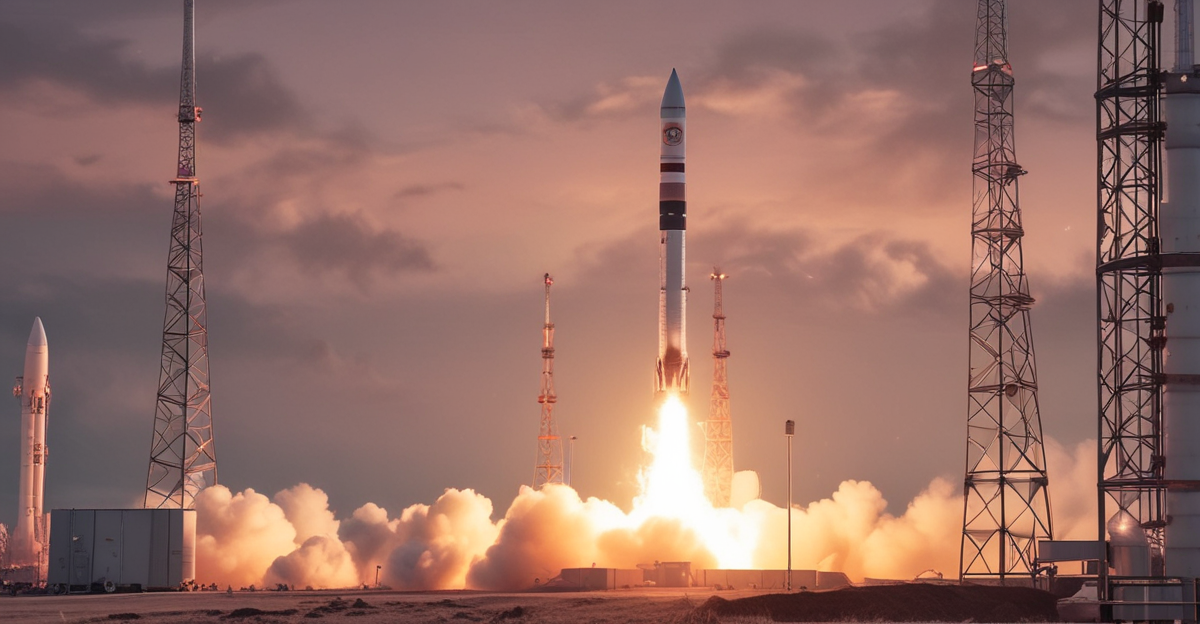
India’s private space sector is rapidly evolving, and Chennai-based startup Agnikul Cosmos is making waves with its ambitious plan to launch 50 rockets annually by 2028. Pioneering the use of 3D-printed rocket engines and mobile launchpads, Agnikul is reshaping the way small satellites get access to space.
Ready to take your brand to the next level?
At Growwh, we help startups and emerging brands grow faster with powerful content, creator collaborations, and tech solutions.
Explore what we do →
Revolutionizing Rocket Launches with 3D-Printed Engines
Founded in 2017, Agnikul Cosmos emerged from a clear market need. Co-founder and CEO Srinath Ravichandran identified a major gap: small satellites were struggling to secure launches on larger rockets, and no dedicated small launch vehicles were readily available. Agnikul’s solution? Develop cost-effective, tailor-made launch vehicles optimized for small satellite payloads.
At the core of Agnikul’s technology is Agnilet, the world’s first 3D-printed, semi-cryogenic rocket engine powered by liquid oxygen and kerosene. Developed with mentorship from IIT Madras and ISRO veteran RV Perumal, this engine was successfully tested in 2021 and later patented in 2022.
The advantages of 3D printing are significant:
- Reduction in engine parts from 14 to just one
- Production time shortened to approximately three days
- Cost-effectiveness that supports affordable access to space
This innovative approach enables rapid iteration and scalability, essential for Agnikul’s vision of frequent, low-cost launches.
India’s First Private Mobile Launchpad: A New Era for Space Access
In 2022, Agnikul also developed India’s first private launchpad, a mobile platform designed for flexibility and safety. Unlike traditional, fixed launch sites, this launchpad incorporates modular plumbing, electronics, and software systems that can be transported and deployed wherever the rocket needs to launch.
Building this mobile launchpad entailed overcoming complex challenges including:
- Ensuring no hazardous substances were used, maintaining safety standards
- Engineering precise systems to sync with India’s national space infrastructure
- Managing fuel loading, countdown, and control with high reliability
The launch of the Agnibaan SOrTeD rocket from Sriharikota exemplified the mobile launchpad’s capabilities, despite initial countdown aborts due to ground system issues that were resolved with rigorous testing.
Vision for Rapid, Quality Launch Cadence
Agnikul aspires to increase launch frequency dramatically to about one rocket every two weeks, an interim milestone towards their ultimate goal of 50 launches per year by 2028. Achieving this requires balancing scale with strict adherence to quality control and supplier reliability.
Ravichandran stresses the importance of developing an ecosystem with punctual, quality-conscious manufacturing partners. The company is confident but cautious, stating, “We know it can be done, but this has to be solved carefully.”
Commitment to Environmental Responsibility
While Agnikul’s semi-cryogenic engines use kerosene and liquid oxygen—propellants with environmental concerns—the startup aims to maximize combustion efficiency to minimize waste. Furthermore, strict de-orbiting protocols ensure rockets are removed from orbit post-mission, reducing space debris and preserving orbital space sustainability.
Growing India’s Space Tech Ecosystem
To drive faster growth in India’s private space sector, Ravichandran emphasizes the need for greater investor awareness and stronger government support. Endorsements from government bodies that validate the commercial viability of space tech startups could significantly enhance investor confidence.
Awarding contracts to technically mature startups would provide a critical boost, accelerating innovation and market penetration.
India’s Expanding Role in the Global Space Economy
India’s space launch services market is among the fastest-growing in the Asia-Pacific region. In 2023, India accounted for 2.9% of the global space launch market revenue and is projected to reach $1.66 billion by 2030, according to Grand View Research.
Globally, the space launch services market is expected to grow from $16.4 billion in 2024 to $46.1 billion by 2033, at a robust CAGR of 11.28%, driven by increasing demand for communication, navigation, Earth observation, and satellite constellation deployments.
Conclusion: Pioneering the Future of Space Launches in India
Agnikul Cosmos demonstrates how innovative engineering and a visionary approach can transform India’s space capabilities. By leveraging 3D printing, building mobile launch platforms, and focusing on low-cost, frequent rocket launches, Agnikul is enabling flexible and affordable access to space for small satellite players.
With a target of 50 launches per year by 2028 and a strong emphasis on sustainability and ecosystem development, Agnikul is poised to become a major player in the global space industry, fulfilling India’s growing ambitions in space technology.
This article was auto-generated as part of a smart content campaign. Curious how we do it? Chat with us to learn more about our content automation systems.
This article was auto-generated as part of a smart content campaign. Curious how we do it? Chat with us to learn more about our content automation systems.
Discover more from Growwh
Subscribe to get the latest posts sent to your email.