
Auto-published by Growwh – a smarter way to scale content and marketing. Want to know more? Chat with us.
TL;DR: Local-currency payments reduce buyer friction and protect seller margins. Modern payment platforms provide transparent FX, faster settlements, and help Indian SMBs expand beyond traditional markets.
Why local-currency payments matter for cross-border sellers
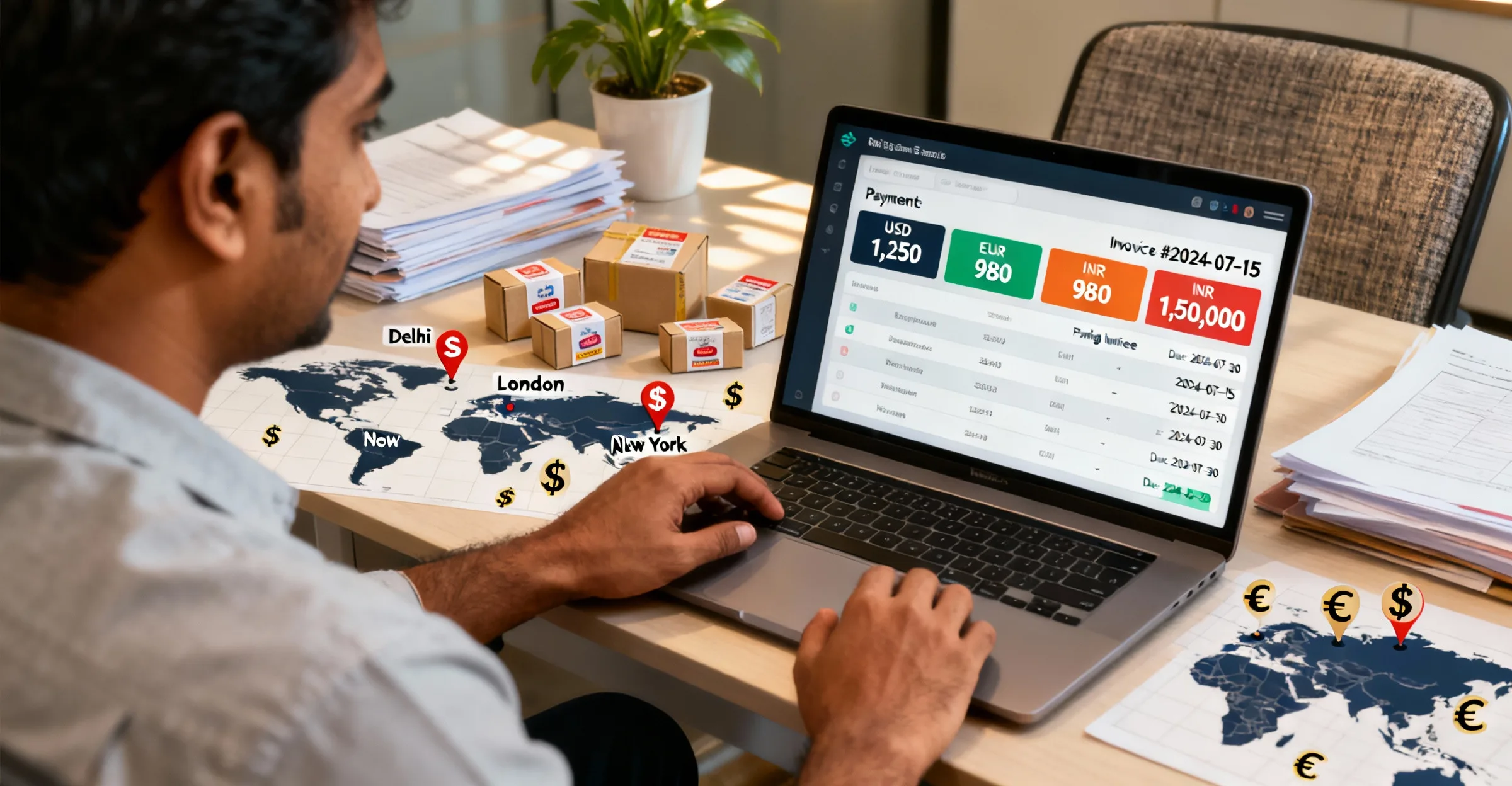
For many Indian SMBs, cross-border trade used to mean high transfer fees, unclear FX rates, and unpredictable settlement timelines. Those frictions made international selling uneconomical for smaller orders and limited exporters to a few established corridors. Allowing buyers to pay in their local currency changes the equation: it reduces buyer friction, provides FX clarity for sellers, and improves conversion and cash-flow predictability.
Ready to take your brand to the next level?
At Growwh, we help startups and emerging brands grow faster with powerful content, creator collaborations, and tech solutions.
Explore what we do →
How modern payment platforms solve historical pain points
Traditional SWIFT-based transfers were reliable but costly and opaque. Platform-based solutions now offer local collection accounts, card and digital-wallet processing, and clearer currency conversion — all in a single dashboard. Sellers can create branded invoices for international clients with multi-currency support, route receipts through partner networks, and avoid multiple intermediary banks that once bloated costs.
What sellers gain: transparency, predictability, and lower costs
- Transparent FX and fee reporting so pricing and margins are accurate.
- Faster, predictable settlements that improve working capital planning.
- Local payment methods for buyers — bank transfers, cards, and wallets — which reduce checkout drop-offs.
These benefits are especially relevant for businesses managing multi-market revenue streams, where consolidated cash-flow visibility and automated receivables/payables reduce operational complexity.
Expanding beyond traditional export corridors
Access to local collection systems has broadened market opportunity. Sellers no longer need to rely solely on the US and UK; they can test Europe, the Middle East, and Southeast Asia more easily by accepting local currencies and payment methods. This diversification strategy helps de-risk revenue concentration and adapt to shifting trade policies.
One platform for end-to-end cross-border finance
Modern payment stacks let businesses receive funds, hold multiple currencies, convert where needed, and pay vendors — without setting up local bank accounts in every market. By reducing fragmented banking relationships and operational overhead, platforms help streamline global operations. Many SMBs also integrate payment workflows with other parts of their tech stack to automate reconciliation and reporting — an area where fintech and payment technology for cross-border commerce plays a critical role.
Why marketplaces and D2C channels matter
Cross-border sellers are increasingly hybrid: they combine marketplaces, subscription models, and direct channels. This is particularly true for D2C startups and cross-border e-commerce, which often need a cohesive financial stack to manage recurring, multi-market revenue. A single platform that plugs into marketplaces and billing systems simplifies collections, helps reconcile multiple income streams, and supports growth into new corridors.
Building trust and improving conversion
Trust is central to international commerce. When buyers see prices and charges in their own currency, they are more likely to complete purchases. On the seller side, visibility into exact FX conversion and settlement dates enables better pricing decisions and preserves margins. Virtual collection accounts — local bank details that let overseas customers pay as if they’re using domestic transfer — are a practical tool to boost conversion without requiring local banking setups.
India as a hub for global fintech and product engineering
India’s fintech talent and engineering capabilities are increasingly powering global payment products. Investment in local R&D and operations centers in India helps global platforms build stronger integrations, improve security and compliance, and apply AI selectively to boost accuracy and performance. For Indian exporters, this means access to better tools and faster feature development that directly improve international selling outcomes.
Practical steps for SMBs to get started
1) Adopt a payments platform that supports multi-currency collection and transparent FX reporting. 2) Offer buyer-friendly payment options (local bank transfers, cards, wallets). 3) Centralize receivables and payables to improve cash-flow visibility. 4) Integrate invoicing, accounting, and marketplace channels to reduce reconciliation overhead.
By embracing local-currency acceptance and modern payment infrastructure, Indian SMBs can compete across more markets, reduce the hidden costs of cross-border commerce, and scale sustainably.
Source
This article was auto-generated as part of a smart content campaign. Curious how we do it? Chat with us to learn more about our content automation systems.
Discover more from Growwh
Subscribe to get the latest posts sent to your email.