
Auto-published by Growwh – a smarter way to scale content and marketing. Want to know more? Chat with us.
TL;DR: ISH grew to 50 stores and Rs 80.5 cr by blending premium ingredients, tech-enabled supply chain, and curated retail experiences.
The brand uses omnichannel D2C, MAP packaging, supplier standards and plans an IPO in 2026.
In just four years, Bengaluru-born India Sweet House (ISH) has reimagined the traditional mithai shop for modern consumers — growing to 50 stores and reporting Rs 80.5 crore in revenue. The brand combines curated in-store experiences, a tech-enabled supply chain, and omnichannel distribution to capture the gap between low-cost bakeries and ultra-premium sweet makers.
Fast growth and a clear market position
ISH’s founders positioned the brand squarely in the premium-mass segment: accessible pricing, premium ingredients and a welcoming store experience. That middle-ground strategy — neither bargain nor ultra-premium — allowed ISH to attract neighbourhood footfalls while retaining higher average ticket values. ISH now operates across Bengaluru and multiple Tier II cities in Karnataka, expanding its footprint and proving that modern retail formats can scale in the mithai category.
Ready to take your brand to the next level?
At Growwh, we help startups and emerging brands grow faster with powerful content, creator collaborations, and tech solutions.
Explore what we do →
Product strategy: tradition with contemporary appeal
Core sweet favourites like Mysore Pak and motichur laddu drive daily volume (nearing 500 kg daily for each), while innovations such as jaggery-based kaju katli and buffalo-ghee Mysore Pak underline ISH’s focus on premium ingredients and authenticity. The menu also includes savouries, chaat and millet-based cookies to broaden entry points for new customers and encourage longer in-store stays.
ISH avoids artificial colours and warak (silver foil), and its price range — from Rs 40 per piece for some sweets to Rs 680–1,600 per kg for barfis — positions the brand as premium yet reachable for everyday occasions.
Experience and visual identity
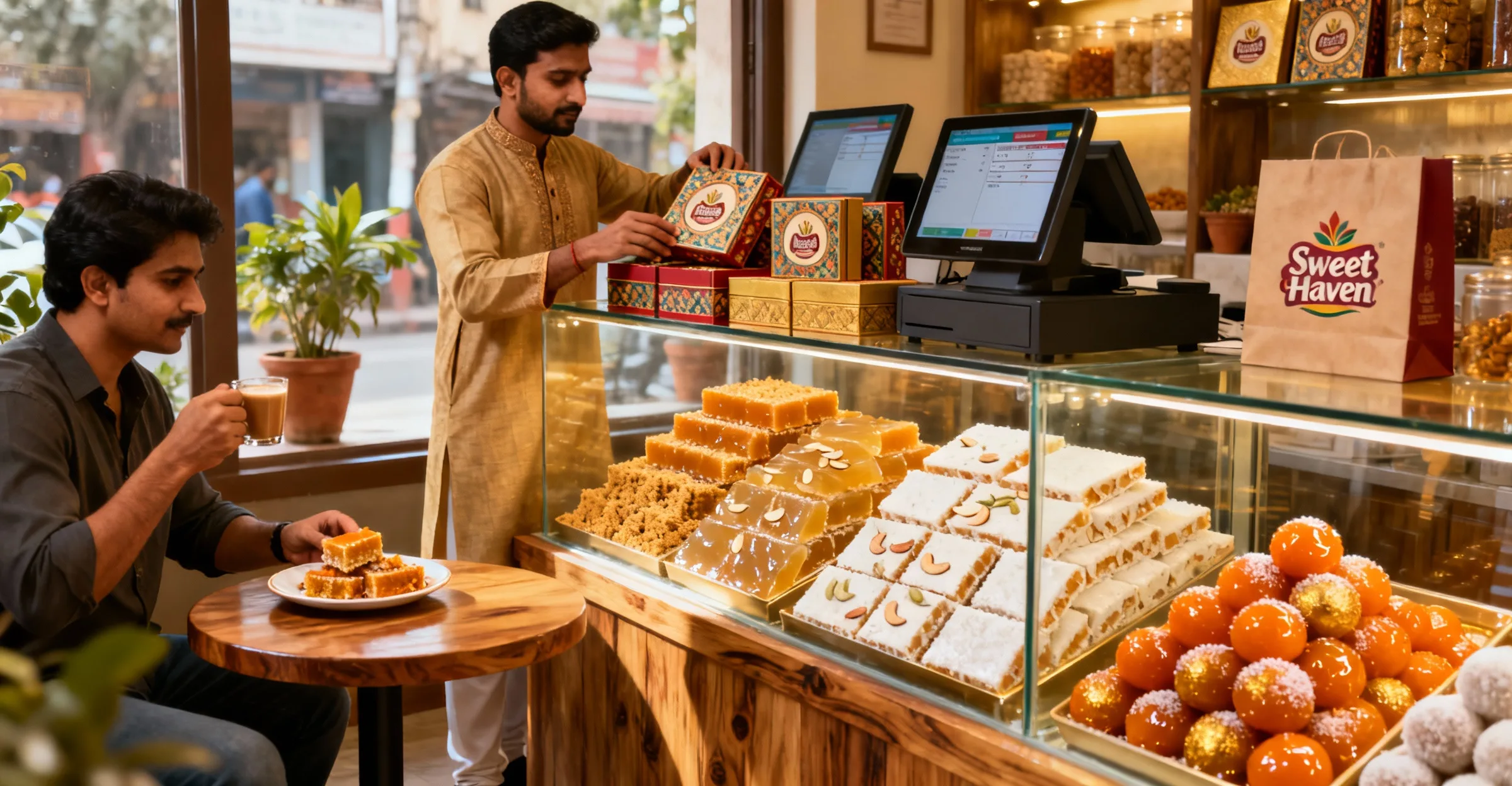
Store ambience is a deliberate growth lever: curated seating, live preparation counters, and an invitation to linger convert casual shoppers into loyal customers. ISH’s packaging, retail signage and store storytelling follow thoughtful brand identity design for Indian consumer brands principles to build recognition and trust across neighbourhoods.
Supply chain, quality and tech
ISH’s origin in an organic farm influenced its quality-first approach. As volumes grew, the brand transitioned from a farm kitchen to a central production unit and started sourcing milk from certified local farmers at premium rates to encourage ethical farming practices. To keep standards consistent, ISH is creating an “ISH-approved” supplier certification and invested in MAP (modified atmosphere packaging) to enable longer shelf life for exports and quick-commerce deliveries.
Technology underpins procurement, inventory and point-of-sale systems — enabling traceability from raw cashew purchases to the retail sale of a kaju katli. The company is also preparing an in-house loyalty programme to capture customer data and improve retention.
Omnichannel distribution and D2C lessons
ISH began online-first, leveraging marketplaces and quick-commerce channels, then scaled physical retail rapidly. Its current offline-to-online sales ratio sits near 70:30, a balance that highlights the continuing importance of store presence in food retail. The brand’s expansion model and D2C playbook offer valuable insights for founders and follows learnings similar to those in D2C startups and scaling strategies for Indian food brands.
Marketing, credibility and retention
Early investments in advertising, earned media, podcasts and awards helped ISH build awareness in a category traditionally dominated by legacy mithai families. For businesses planning similar growth, a cohesive digital approach — combining brand-building and performance tactics — is essential; a useful primer is the digital marketing guide for Indian businesses (2025).
Expansion roadmap and IPO ambitions
With stores across Bengaluru, Mysuru, Mangalore and multiple Tier II locations, ISH plans to expand into neighbouring states and aims for an IPO in 2026. The company has experimented with exports using MAP and selected distribution in the US and Australia, though some international shipments were paused for regulatory reasons.
Key takeaways for founders
- Find a white space: position between extremes (value vs ultra-premium) to capture mass premium demand.
- Standardise quality early: supplier certification and traceability reduce variability as you scale.
- Blend offline presence with D2C and quick-commerce to maximise reach and convenience.
- Invest in brand identity and in-store experience to turn transactions into relationships.
- Use tech and packaging (MAP) to expand geography and improve shelf life for new channels.
India Sweet House demonstrates how a category steeped in tradition can be modernised without losing authenticity: by combining ingredient-led innovation, consistent operational standards, an inviting retail experience and omnichannel distribution. For food brands looking to scale in India, ISH’s playbook — product-first, tech-enabled and experience-driven — offers a practical roadmap to grow beyond local neighbourhoods into a regional or national brand.
Source
This article was auto-generated as part of a smart content campaign. Curious how we do it? Chat with us to learn more about our content automation systems.
Discover more from Growwh
Subscribe to get the latest posts sent to your email.