
Auto-published by Growwh – a smarter way to scale content and marketing. Want to know more? Chat with us.
TL;DR: Nova Dairy scaled from a local retail shop to a 2.6M-litre/day network by combining farmer programs, chilling centres, and modern plants.
Sustainability—solar/wind, biogas, methane-reducing feed—and automation are central to quality, resilience and export growth.
From Old Delhi Shops to Modern Dairy Hubs
Nova Dairy has evolved from a family retail shop in Old Delhi to a major private-sector dairy with integrated supply chains, modern processing plants, and a clear focus on sustainability. Its growth shows how capacity expansions, farmer engagement, and operational discipline can convert a regional brand into a reliable supplier for both consumers and institutions.
Ready to take your brand to the next level?
At Growwh, we help startups and emerging brands grow faster with powerful content, creator collaborations, and tech solutions.
Explore what we do →
Scale, Capacity and Operational Discipline
Starting production in 1992 at Kundli with 100,000 litres per day, Nova expanded across three plants—Kundli, Malanpur and Kasganj—to process about 2.6 million litres daily today. Investments in European processing equipment and automated packaging lines have helped maintain product consistency and keep wastage in a tight 0.5%–1% range. Regular maintenance and parts replacement cycles ensure uptime, while automated monitoring makes deviations visible within hours.
Complex Procurement, Deep Farmer Networks
Nova sources raw milk from over 150,000 farmers via collection agents, village centres and eight formally adopted villages, supported by 120 chilling centres that consolidate 2,000–5,000 litres each. This dense network reduces transit time and preserves quality. Quality is validated at the village, chilling centre and plant levels, and any shortfall in fat or SNF (solids-not-fat) is addressed with targeted remedial measures.
Farmer Support and On-Farm Interventions
Recognising that milk quality begins at the farm, Nova provides health check-ups, improved feed at subsidised rates, guidance on milking hygiene, and methane-reduction feed interventions. These measures improve yield and traceability while strengthening farmer livelihoods and year-round supply reliability.
Renewable Energy, Waste Management and Carbon-Negative Ambitions
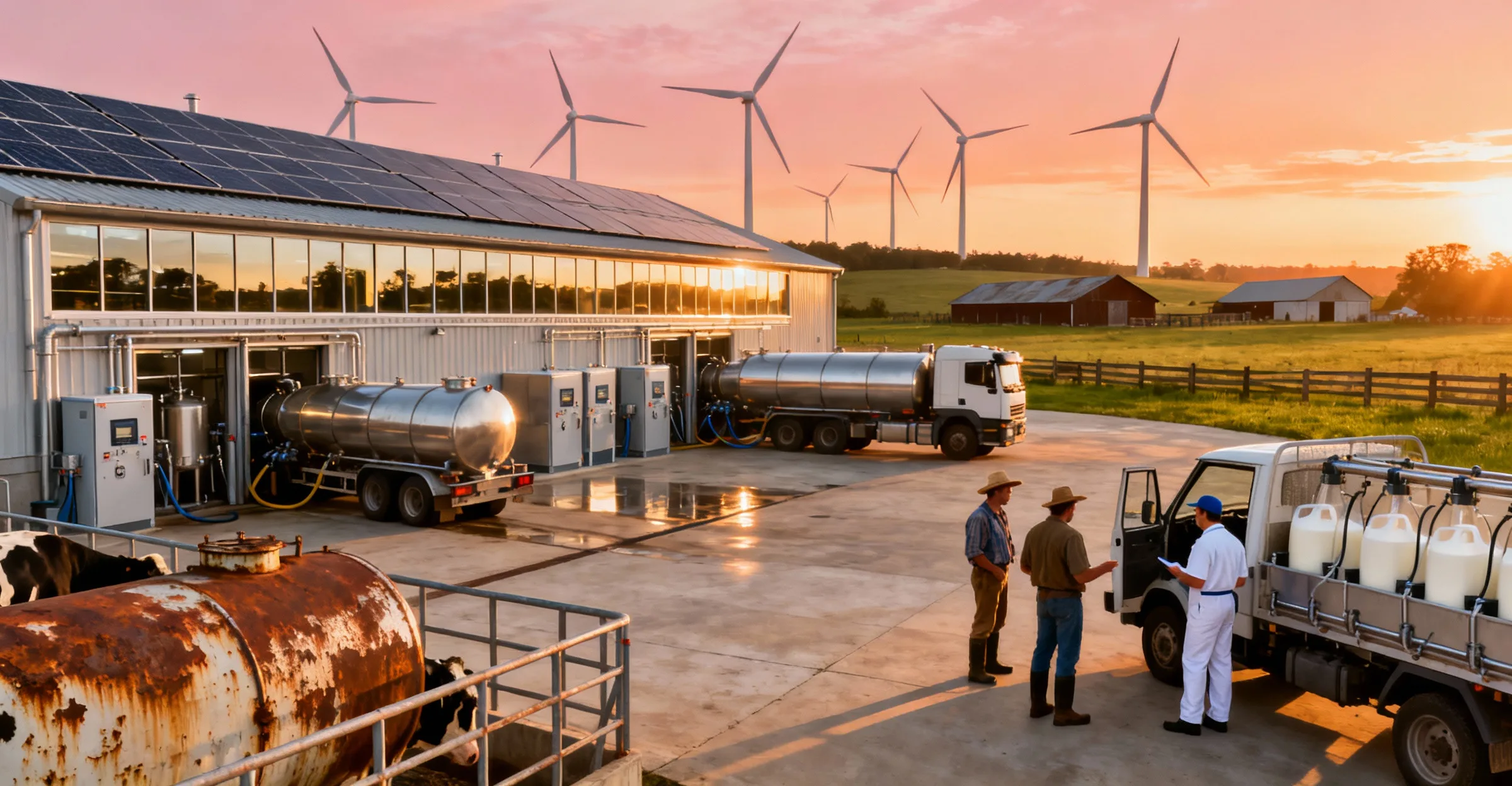
Nova claims to be India’s first carbon-negative dairy, driven by large-scale investments in wind and solar to offset operational emissions, and on-farm measures such as biogas adoption and improved waste management. Methane-reducing feeds and manure-to-energy systems are part of a circular approach that reduces emissions and converts waste into value for farmers and plants alike.
Serving B2B and B2C Markets with Traceability
Roughly half of Nova’s revenues come from B2B contracts with institutions and FMCG clients, while the rest is retail distribution through department stores, kirana shops and regional distributors. White-label manufacturing and exports (to 30+ countries) complement domestic sales. Institutional customers demand bulk consistency and traceability, while consumers expect freshness and safe packaging — a balance achieved through rigorous testing and logistics control.
Technology, Automation and Processing Excellence
High-throughput European machinery from Alfa Laval and Tetra Pak, integrated with Indian packaging lines and automated filling/sealing systems, underpin consistent quality. For dairy professionals exploring similar upgrades, investing in dairy processing technology and automation can raise throughput, reduce contamination risk and improve traceability across the plant.
Sustainability Is a Business Strategy
Beyond compliance, Nova’s sustainability agenda—implemented with partners and through its Sustainable Dairy Programme—drives productivity gains, supply stability, and improved farmer incomes. Those investigating industry shifts should watch sustainable dairy supply chain trends to align procurement, renewable energy investments, and carbon strategies with market expectations.
Challenges and Forward Strategy
Floods, feed shortages and volatile raw milk prices highlight the risks inherent in dairy. Nova is focused on stabilising procurement, expanding farm-level biogas adoption, and exploring new product lines and export markets. Practical operational playbooks are essential—refer to curated guides and how-tos for building dairy supply networks and sustainable practices to design farmer engagement, chilling centre operations, and quality control systems that scale.
Key Takeaways
- Integrated procurement and chilling infrastructure are critical to quality and resilience.
- Automation and modern processing equipment improve consistency and lower losses.
- Sustainability investments—renewables, biogas, methane-reducing feed—support farmer incomes and carbon goals.
- Balanced B2B and B2C strategies diversify revenue while demanding differentiated quality controls.
Nova Dairy’s journey demonstrates that growth built on farmer support, technology, and sustainable practices is more resilient than expansion focused solely on capacity. For dairy businesses planning scale-up, integrating procurement stability, renewable energy and automation creates both commercial and environmental value.
Source
This article was auto-generated as part of a smart content campaign. Curious how we do it? Chat with us to learn more about our content automation systems.
Discover more from Growwh
Subscribe to get the latest posts sent to your email.