Auto-published by Growwh – a smarter way to scale content and marketing. Want to know more? Chat with us.
TL;DR: OCR converts paper invoices into structured purchase entries, cutting manual entry time and errors. It improves inventory accuracy, compliance, and bookkeeping habits for MSMEs in India.
Introduction
Running a micro, small or medium enterprise in India involves far more than selling a product or service. Owners must juggle billing, inventory, supplier coordination, compliance, and day-to-day accounting—often with small teams or alone. This makes bookkeeping one of the most time-consuming and error-prone tasks, particularly because purchase invoices still arrive in many paper and image formats.
Ready to take your brand to the next level?
At Growwh, we help startups and emerging brands grow faster with powerful content, creator collaborations, and tech solutions.
Explore what we do →
Why manual purchase bookkeeping remains a bottleneck
Sales invoices are frequently standardised and digital, but purchase bills come as printed receipts, handwritten notes, scanned PDFs, or images shared over messaging apps. Manually entering each purchase creates delays, errors in quantities or GST, and outdated inventory records. For many MSMEs, this means unreliable reports, missed reorder points, and increased compliance stress.
OCR as the practical bridge from paper to structured records
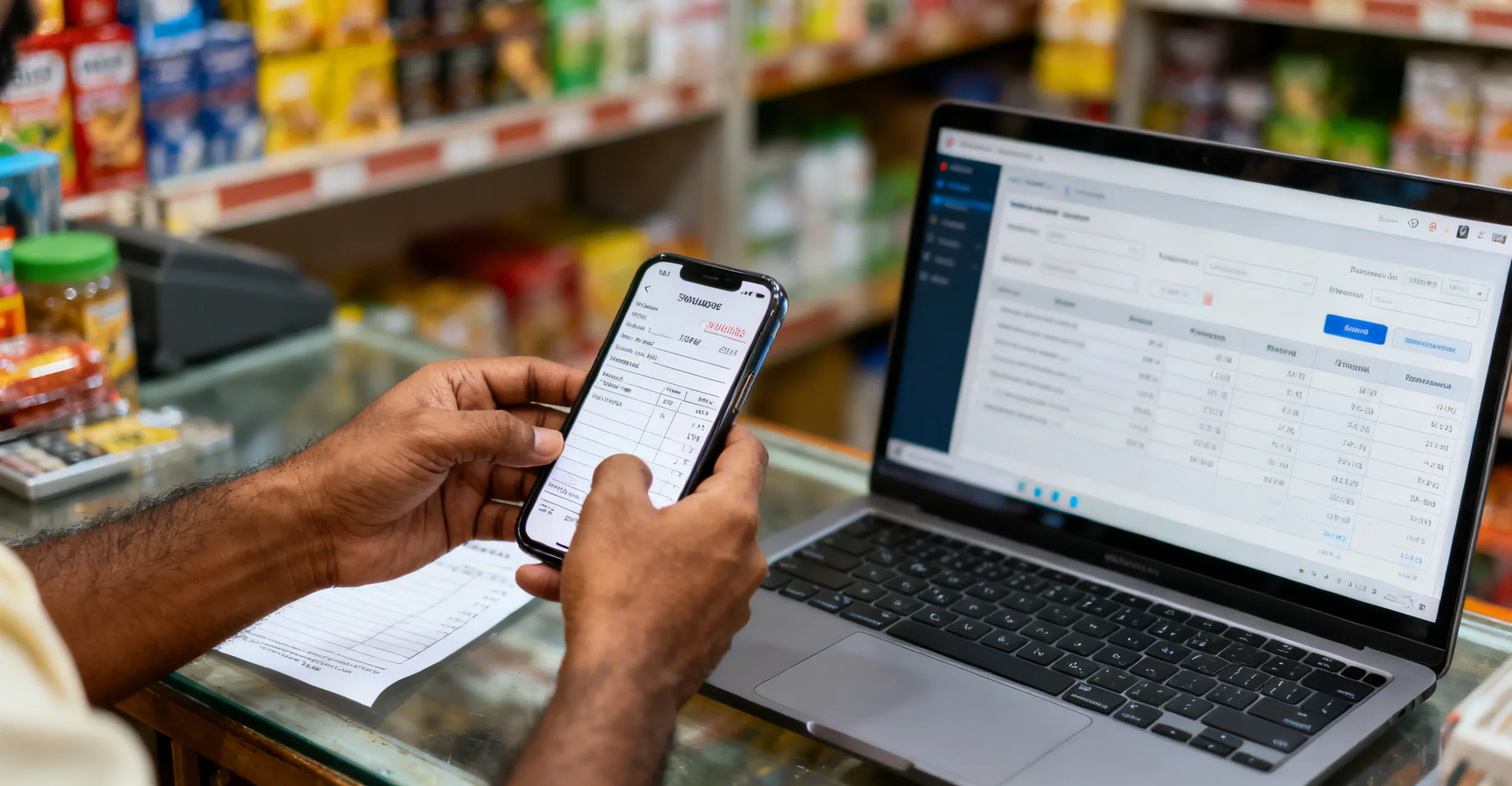
Optical Character Recognition (OCR) converts physical invoices and photos into structured data that bookkeeping systems can use. By extracting key fields—supplier name, item descriptions, quantities, prices, and tax components—OCR dramatically reduces repetitive data entry and the errors that come with it. This isn’t digitisation for its own sake; it’s a realistic way to integrate paper-heavy supply chains into modern workflows.
Product benefits that matter to MSMEs
- Time savings: Upload a photo and generate a purchase entry instead of typing every line after hours.
- Improved accuracy: Fewer manual transcription errors in pricing, GST, and quantities.
- Near real-time inventory: Faster updates enable better purchasing decisions and fewer stockouts.
- Consistency: Easier entry encourages regular bookkeeping habits and reduces end-of-period stress.
For teams building bookkeeping tools, solving this gap between paper inputs and digital records is essential. If you are exploring broader automation across operations, consider OCR alongside other solutions described at OCR, automation, and AI solutions for MSMEs to create a cohesive flow from documents to decisions.
Product & implementation considerations
When integrating OCR into bookkeeping workflows, focus on these areas:
- Extraction accuracy: The engine should handle printed and common handwritten formats found in local markets.
- Field mapping: Clear mapping from invoice fields to purchase entry fields (GST rates, HSN/SAC, discounts).
- Validation UI: Present suggested entries to the user for quick confirmation rather than full manual edits.
- Mobile-first capture: Enable quick smartphone photos because many invoices arrive via messaging apps.
- Privacy & storage: Secure storage, regional compliance and easy retrieval for audits.
Encouraging better bookkeeping behaviour
Technology reduces friction, but behavioural change matters too. When capturing invoices is as simple as snapping a photo, business owners are more likely to record purchases immediately. This builds a habit of timely bookkeeping, and improved data quality helps with supplier negotiations, margin analysis, and compliance. If you want practical guides for bookkeeping tailored to small Indian startups, there are focused resources outlining workflows and best practices for early-stage teams at MSME bookkeeping insights for Indian startups.
Wider trends: fintech, bookkeeping and digital adoption
OCR is part of a broader shift in the MSME tech stack—where fintech, automation, and accounting converge to deliver real operational gains. As digital payments and GST compliance tools mature, integrating OCR into bookkeeping closes the last-mile gap for paper-heavy purchases. For a look at how fintech and bookkeeping are evolving for Indian micro, small and medium businesses, explore ongoing analyses and trends at fintech and bookkeeping trends for Indian micro, small and medium businesses.
Best practices to maximize ROI from OCR
- Start small: Pilot OCR on the most common invoice formats before expanding to rarer templates.
- Train & tune: Continuously refine recognition models with locally sourced invoices to boost accuracy.
- Human-in-the-loop: Use quick validation steps to catch edge cases and build trust in automation.
- Integrate end-to-end: Link OCR outputs to inventory, purchase ledgers, and payment workflows so data flows seamlessly.
Conclusion
Manual bookkeeping will continue to be an operational constraint until systems adapt to real-world document formats. OCR offers a practical, high-impact bridge—converting paper and images into structured purchase entries, improving accuracy, reducing effort, and encouraging disciplined record-keeping. For Indian MSMEs that operate across paper and digital worlds, OCR is not just a feature; it’s a foundation for cleaner books, better inventory control, and more confident business decisions.
This article was auto-generated as part of a smart content campaign. Curious how we do it? Chat with us to learn more about our content automation systems.