
Auto-published by Growwh – a smarter way to scale content and marketing. Want to know more? Chat with us.
TL;DR: 2026 could be a turning point for Indian MSMEs if policy reforms, digital credit tools, and export facilitation are executed consistently.
Stronger Indo-US trade ties and improved readiness can shift MSMEs from cost-led suppliers to value-driven global partners.
2026: A Potential Turning Point for Indian MSMEs
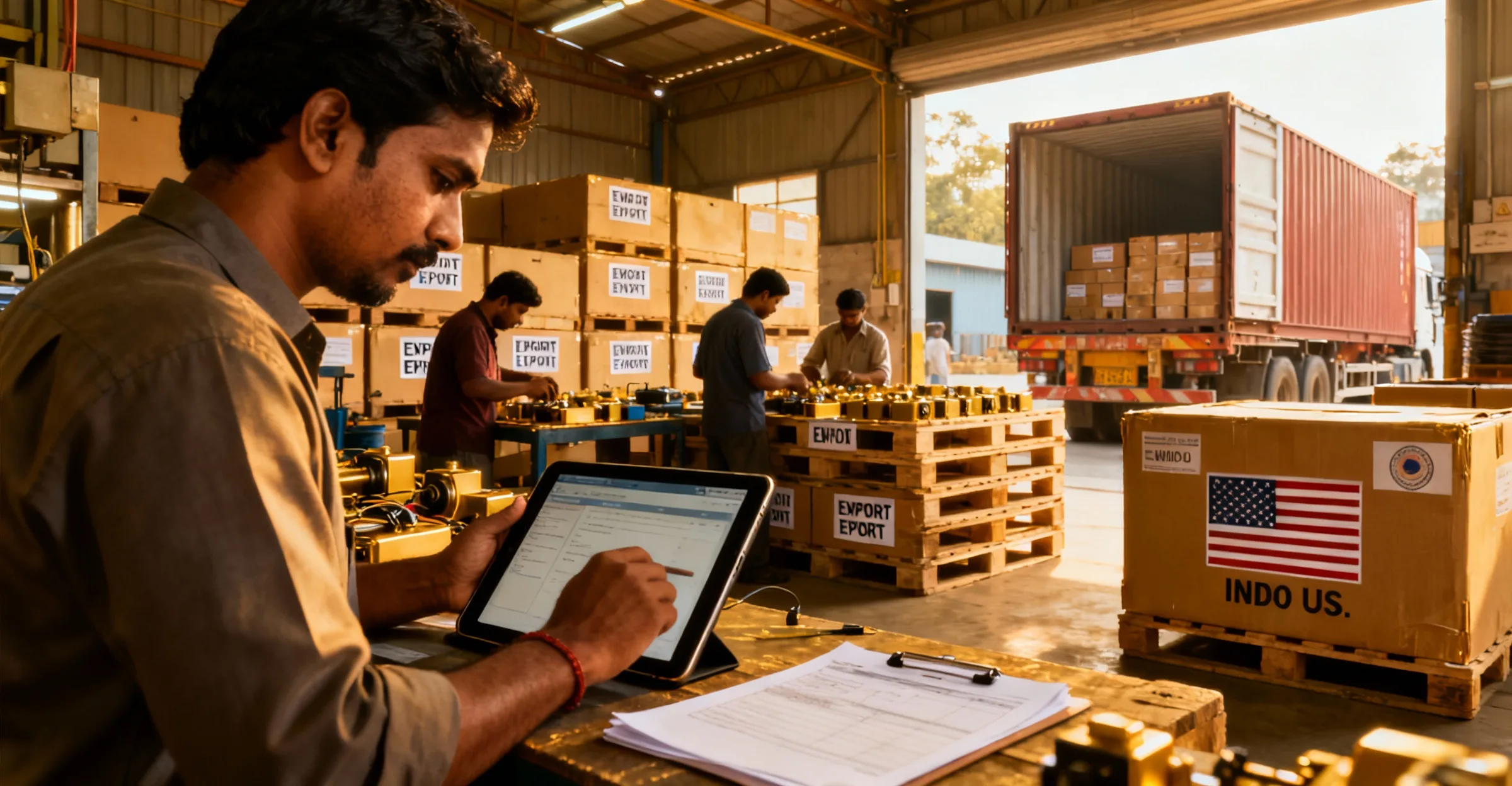
India’s 6.82 crore registered micro, small, and medium enterprises (MSMEs) enter 2026 with cautious optimism. After years of regulatory complexity and global trade shifts, a mix of domestic reforms and evolving international partnerships—especially with the United States—could reshape opportunities for exporters, manufacturers, and D2C brands. This convergence of factors is exactly the kind of policy reforms affecting Indian MSMEs and Indo-US trade that can turn intent into scalable growth.
Ready to take your brand to the next level?
At Growwh, we help startups and emerging brands grow faster with powerful content, creator collaborations, and tech solutions.
Explore what we do →
Why 2026 Matters
MSMEs account for 30.1% of India’s GDP, 35.4% of manufacturing output, and 45.73% of exports while employing 28 crore people. For India’s growth ambitions, MSME performance is essential. The Union Budget 2025-26 raised MSME investment and turnover thresholds, allowing many growing businesses to retain policy benefits while scaling—removing a critical barrier that previously penalised growth.
Key Policy Shifts Reshaping Growth
- Expanded MSME classification: Investment limits increased 2.5x and turnover thresholds doubled, enabling more firms to access preferential support as they scale.
- Export Promotion Mission: A consolidated Rs 25,060 crore mission through FY2030-31 simplifies support for export credit, cross-border factoring, and non-tariff barrier mitigation.
- Digital public infrastructure: Tools such as the Unified Lending Interface (ULI), OCEN, UPI and faceless tax assessments reduce compliance burden and speed up approvals.
Digital and Credit Infrastructure: The New Enablers
Levers such as ULI promise to standardise lending workflows and cut turnaround times, much like UPI did for payments. Combined with digitised GST processes and platforms that reduce paperwork, MSMEs can redirect administrative effort into quality, scale, and market development. Improved access to trade finance and export credit insurance will also help firms accept larger orders and offer competitive payment terms.
Indo-US Trade: Market Access and Supply Chain Opportunities
Bilateral trade with the US topped $131.84 billion in 2024-25, and negotiations aim to more than double trade to $500 billion by 2030. For MSMEs, the practical opportunity lies in contract manufacturing, OEM partnerships, and integrated supply-chain roles rather than only direct exports. Sectors such as consumer durables, electrical goods, auto components, precision engineering, and sustainable consumer products stand to benefit the most.
Those watching sectoral shifts can gain perspective from broader industry insights and trends for Indian startups and trade, which highlight where demand in global markets is most resilient and where Indian firms can specialise to capture higher-value segments.
Tariffs, Diversification, and Strategic Advantage
Tariff realignments could improve price competitiveness in the US, but experts stress that strategic value goes beyond tariffs. Exposure to tariff risk encourages diversification into the UK, EU, Japan, the Middle East, and Africa, pushing MSMEs to become more cost-efficient, process-driven, and compliance-ready. Reliability, quality at scale, traceability, and predictable delivery will be the differentiators for getting repeat orders from global buyers.
Export Readiness: Where MSMEs Stand
MSMEs generally fall into two groups: “export-ready” firms with robust documentation, HS classification, origin paperwork and audit-ready quality systems; and those “not fully ready” that face gaps in tariff literacy, compliance, working capital, and process knowledge (Incoterms, warranty terms, SLAs). Government-led export facilitation—faster customs clearances, enhanced trade finance, and export insurance—becomes mission-critical to bridge this gap.
D2C, Startups and Consumer Opportunities
Indian D2C brands and startups are uniquely positioned to capture diaspora and niche consumer demand in overseas markets. Authentic, shelf-stable food products, sustainable consumer goods replacing single-use plastics, and convenience-focused staples for students and young professionals abroad are appealing categories. The evolving Indian D2C and startup ecosystem is already experimenting with export-market productizations, improved packaging, and compliance-ready supply chains.
What MSMEs Need to Convert Opportunity into Growth
- Predictability: Multi-year policy stability for export incentives, duty remissions, and minimum retrospective changes.
- Faster refunds and clearances: Time-bound GST/export refunds and quicker customs to reduce working capital drag.
- Accessible capital: Affordable long-term CE credit linked to exports plus stronger export credit insurance pools.
- Process upgrades: Investment in quality systems, traceability, documentation, and tariff literacy.
Practical Steps for MSMEs in 2026
- Audit export-readiness: HS codes, rules of origin, Incoterms and basic audit documentation.
- Upgrade quality systems incrementally to meet buyer audits and traceability requirements.
- Engage with export facilitation programs and trade finance offerings to test larger orders.
- Explore OEM and contract manufacturing partnerships to enter US-centric supply chains.
Conclusion
2026 could be a turning point for Indian MSMEs if policy intent is matched by consistent execution. Expanded MSME classifications, digital credit infrastructure, consolidated export support, and stronger Indo-US trade ties create a rare convergence of opportunity. The difference between one-off enquiries and repeat global orders will come down to predictability, execution discipline, and readiness to invest in quality and compliance. For growth-minded MSMEs, the groundwork is set—the next step is disciplined implementation and market-focused scaling.
Source
This article was auto-generated as part of a smart content campaign. Curious how we do it? Chat with us to learn more about our content automation systems.
Discover more from Growwh
Subscribe to get the latest posts sent to your email.