
Auto-published by Growwh – a smarter way to scale content and marketing. Want to know more? Chat with us.
Chandpur Paper grew from a 25 TPD kraft mill to a Rs 250 Cr sustainable packaging leader via recycled inputs, tech upgrades, water recycling and renewable energy.
Chandpur Paper’s sustainable rise: from a kraft mill to Rs 250 Cr
In 1998 a 25 TPD kraft paper unit in Chandpur began a journey that would, over two decades, transform into a Rs 250 crore packaging business. Built on a blend of legacy values and modernisation, Chandpur Paper scaled production, diversified its product mix and embedded sustainability into its operations.
Ready to take your brand to the next level?
At Growwh, we help startups and emerging brands grow faster with powerful content, creator collaborations, and tech solutions.
Explore what we do →
Scaling with smart manufacturing
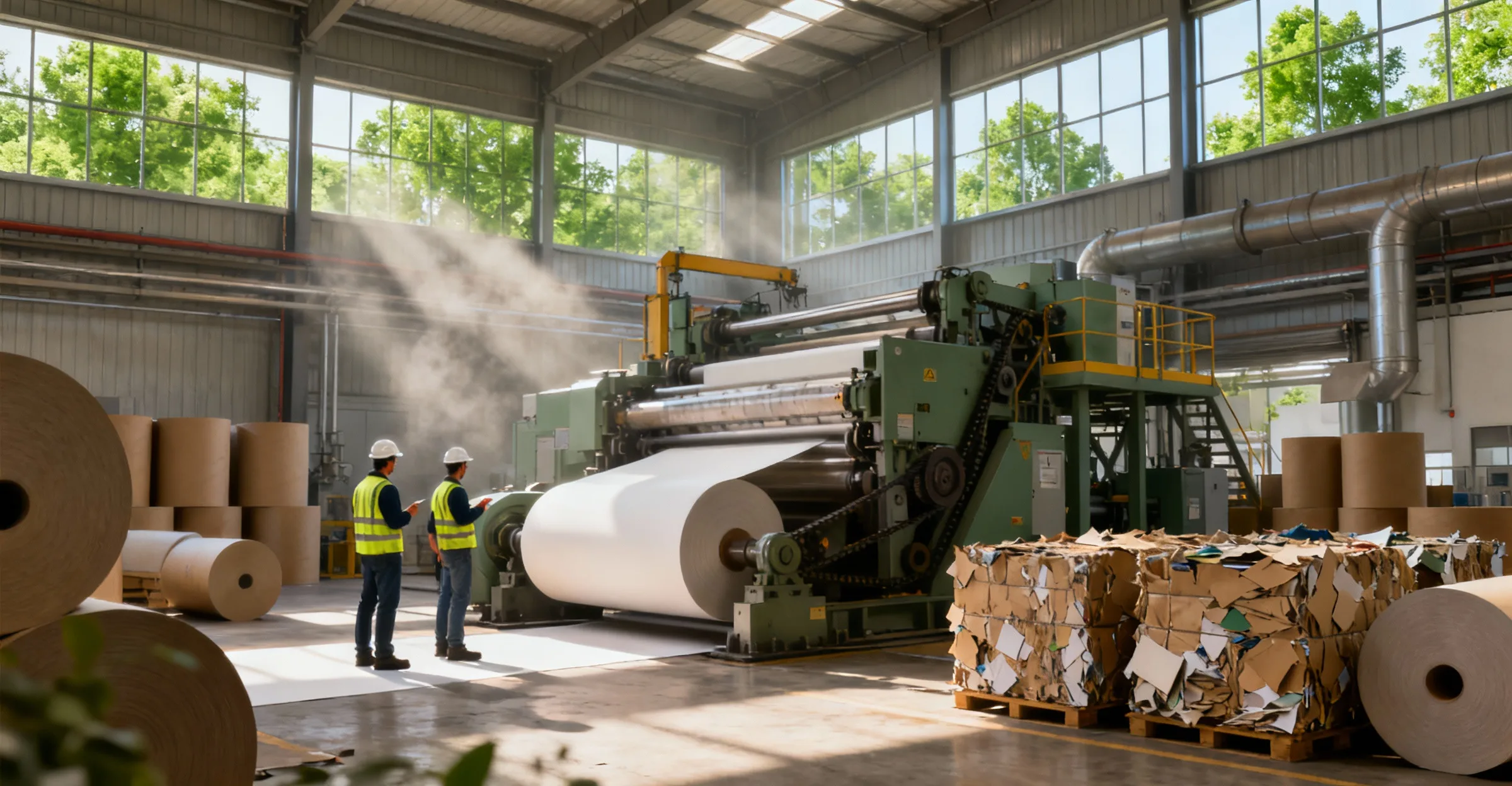
The company expanded to 18 acres and upgraded to two modern paper machines with a combined capacity of 140 TPD, supported by in-house pulp preparation and power facilities. Precision machinery, partnerships with global technology vendors and rigorous quality control helped the firm move into MG poster and Chromo (C1S) specialty papers used across FMCG, ecommerce, QSRs and retail.
Product diversification for market resilience
Chandpur now manufactures a wide range of products including thermal and sublimation papers, soap wraps, tobacco pouches, sugar sachets, labelling solutions and gift wraps. This diversification reduced dependency on a single product line and opened new channels across industries that demand high print quality and durability.
Sustainability in action
Sustainability is central to the company’s strategy: the plant uses 100% recycled raw materials, recycles 35,000 tonnes of used paper annually, treats 500,000 litres of water daily for irrigation, and employs biowaste such as bagasse as a pulp substitute. These measures align with broader sustainability trends in packaging and manufacturing and show how packaging businesses can materially reduce carbon footprint while improving margins.
Technology, process control and waste management
Investments in energy-efficient equipment, advanced paper-making lines, water reuse systems and cleaner chemicals have reduced waste and improved product uniformity. Collaborations with equipment and engineering partners enabled Chandpur to implement continuous improvement processes that boost throughput and quality while lowering environmental impact.
Market positioning and customer focus
Serving about 200 B2B clients via a network of over 30 dealers, Chandpur competes with larger incumbents by offering products that match international standards and by highlighting sustainable inputs. The fast-growing paper packaging market in India rewards companies that combine operational excellence with clear sustainability credentials.
For entrepreneurs and new entrants, Chandpur’s evolution echoes lessons from other packaging startup success stories: begin with a focused capability, relentlessly improve quality, and pivot towards green propositions as market demand shifts.
Practical growth strategies for Indian packaging firms
Key strategies include targeted technology upgrades, leveraging local waste streams for raw materials, strengthening water and energy management, and expanding distribution channels across regions. These approaches mirror recommended growth strategies for Indian packaging startups—customer-centric product development, regional expansion, and operational efficiency.
What’s next for Chandpur
Looking ahead, Chandpur plans to launch high-strength packaging paper that could substitute certain plastics, expand into South India and explore export markets. Continued focus on renewable energy, circular inputs and process optimisation will guide the next phase of scale.
Key takeaways
- Embed sustainability early: recycled inputs and water reuse cut costs and emissions while appealing to conscious buyers.
- Upgrade selectively: targeted tech investments improve product quality and lower per-unit waste.
- Diversify products: serving multiple sectors stabilises revenue and opens new routes to growth.
- Use local circular inputs: agricultural and industrial residues can replace virgin pulp and strengthen community linkages.
Chandpur Paper’s journey from a small kraft mill to a Rs 250 crore packaging enterprise is a practical blueprint for combining profitability with purpose. It demonstrates that with the right mix of technology, sustainable inputs and market focus, packaging businesses can scale responsibly and profitably.
Source
This article was auto-generated as part of a smart content campaign. Curious how we do it? Chat with us to learn more about our content automation systems.
Discover more from Growwh
Subscribe to get the latest posts sent to your email.